Can You Drive With a Photocopy of a Driver’s License in the Philippines?
Many drivers in the Philippines wonder whether carrying a photocopy of a driver’s license is enough when they are on the road. Some keep a laminated copy in their wallet, while others save a photo of their license on their phone, thinking it might work during checkpoints or traffic inspections.
While this may seem practical, Philippine traffic regulations are very clear about what documents must be presented when driving. Understanding whether a photocopy, printed copy, or digital image is legally acceptable can help you avoid fines, penalties, and unnecessary inconvenience. In this guide, we explain whether you can legally drive with a photocopy of your driver’s license, what the law requires, what alternatives are accepted, and what to do if you lose or forget your original license.
You can check here for How to Get a Driver’s License in Philippines.
Is It Legal to Drive With a Photocopy of a Driver’s License ?
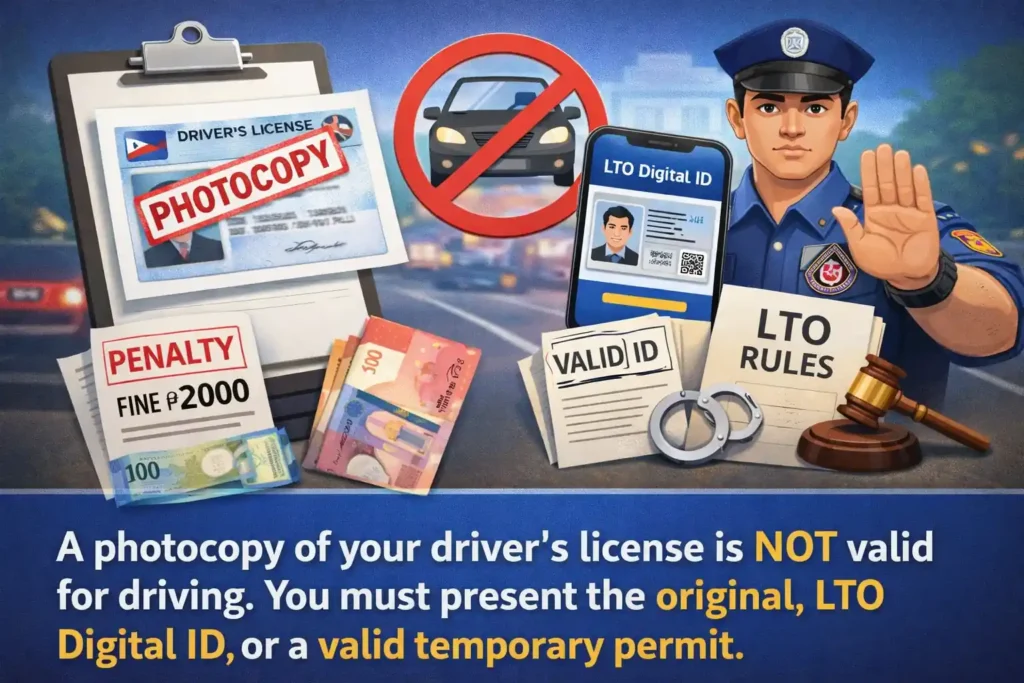
No, it is not legal to drive with only a photocopy of your driver’s license in the Philippines.
Traffic authorities require drivers to present a valid and verifiable driver’s license during inspections. A photocopy — whether black and white, colored, laminated, or printed — does not replace the original license. Since photocopies do not contain the security features of the official card, they cannot be authenticated during roadside checks.
This means that even if your photocopy is clear and looks official, it is still not considered valid proof of driving authority.
Why Photocopies and Screenshots Are Not Accepted
There are several reasons why a photocopy of a driver’s license is not accepted:
First, the original driver’s license contains security features such as holograms, barcodes, and embedded verification elements. These features help authorities confirm that the license is genuine.
Second, photocopies and screenshots can easily be edited or manipulated. Because of this, traffic enforcers cannot rely on them as official documents.
Third, enforcement officers are required to inspect the actual card or a verified digital version. A printed or saved image does not meet verification standards.
This applies to:
None of these are legally accepted while driving.
What Happens If You Only Present a Photocopy?
If you are stopped at a checkpoint or traffic inspection and you only present a photocopy of your driver’s license, it may be treated as a failure to present a valid license.
This can result in:
The exact penalty may vary depending on current enforcement guidelines, but it is not worth the risk. Always carry the proper document before driving.
What Documents Are Accepted While Driving?
Although photocopies are not allowed, there are officially recognized alternatives.
1. Original Physical Driver’s License
The original plastic driver’s license card issued by the LTO remains the primary and safest document to carry when driving. This is the standard proof of legal driving authority.
2. LTO Digital Driver’s License (eDL)
The official electronic driver’s license (eDL) available through the LTMS portal is valid.
However, there is an important condition: it must be shown directly from the LTMS system. Screenshots or printed versions of the digital license are not accepted because they cannot be verified in real time.
If you plan to rely on the digital version, make sure you can access your LTMS account when needed.
3. Temporary Paper License With QR Code
In cases where the plastic card is unavailable, the LTO may issue a temporary paper license with a scannable QR code.
This temporary license is valid as long as:
- The QR code is clear and readable
- The information matches LTO records
Drivers waiting for their official card can legally use this document.
Special Rules for Foreign Drivers
Foreign visitors are allowed to drive in the Philippines under certain conditions.
A tourist may drive for up to 90 days from the date of arrival, provided they carry:
A photocopy of a foreign license alone is not valid for driving. The original document must always be presented.
If a foreign national plans to stay longer than 90 days and continue driving, they must convert their foreign license to a Philippine driver’s license through the proper LTO process.
Are Photocopies of Vehicle Documents Allowed?
Yes, this is where confusion often happens.
Photocopies of vehicle documents such as:
are commonly accepted during inspections. Many drivers keep copies inside the vehicle while storing the originals safely at home.
However, this rule does not apply to driver’s licenses. The license must be original or officially digital.
What If You Forgot Your Driver’s License?
If you forget your license at home and cannot present it during a traffic stop, you may still receive a citation.
While some authorities may allow you to present it later at a designated office, this is not guaranteed. The safest practice is to check that you have your license before driving.
What If You Lost Your Driver’s License?
If your driver’s license is lost, you should apply for a replacement at the nearest LTO branch as soon as possible.
You may be required to:
Until you receive a valid replacement or temporary authorization, you should avoid driving. A photocopy of the lost license does not make it legal to drive.
Common Myths About Photocopies of Driver’s Licenses
Many drivers believe certain assumptions that are not accurate.
A laminated photocopy is not valid just because it looks official.
A screenshot on your phone is not legally recognized.
Printing your digital license does not replace the original or verified eDL.
Understanding these misconceptions can prevent costly mistakes.
Conclusion
Driving legally in the Philippines requires carrying a valid and verifiable driver’s license at all times. A photocopy of a driver’s license, whether printed, laminated, or saved as a phone image, does not replace the original document when you are on the road. Authorities must be able to verify official security features that only the original card or the authorized LTO digital license can provide.
To avoid penalties, fines, and unnecessary stress, always bring your original driver’s license or ensure you can access your official eDL through the LTMS portal before driving. Staying compliant with documentation requirements ensures a smoother and legally protected driving experience.
Frequently Asked Questions
Can I drive with a photocopy of my driver’s license in the Philippines?
No. A photocopy is not considered valid proof while driving. You must present the original license or the official digital version from the LTMS portal.
Is a laminated photocopy accepted?
No. Laminating a photocopy does not make it legally valid.
Is a screenshot of my driver’s license valid?
No. Screenshots or saved photos cannot be verified and are not accepted during inspections.
Is the LTO Digital ID valid?
Yes. The official digital driver’s license accessed through the LTMS portal is valid when shown directly from the system.
Is a temporary paper license valid?
Yes. A temporary paper license with a scannable QR code is valid while waiting for the official plastic card.
How long can a foreigner drive in the Philippines?
A foreign visitor can drive for up to 90 days from the date of arrival, provided they carry their original foreign license and passport.
What is the penalty for not carrying a driver’s license?
Failing to present a valid driver’s license may result in a traffic violation and fines depending on current LTO regulations.
What should I do if I lost my driver’s license?
Apply for a replacement at the nearest LTO branch immediately. Do not drive until you have a valid replacement or authorized temporary document.
Written by Joseph
Joseph covers LTO guides and helps Filipino motorists navigate LTMS online services — from portal registration and plate tracking to renewals and violations. Every guide is researched against official LTO and MMDA sources and updated regularly.